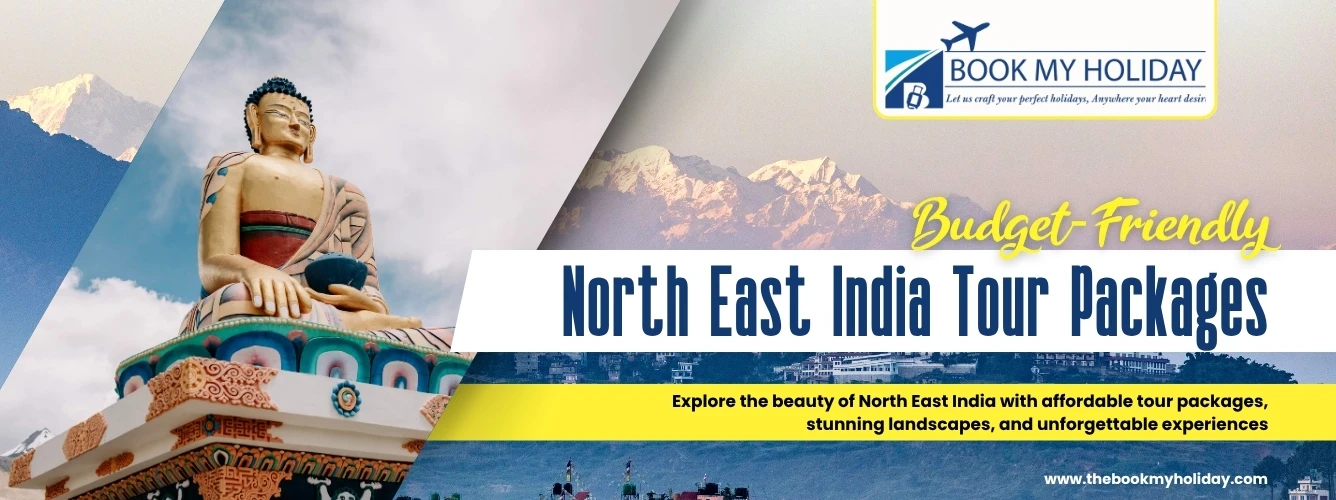
If you’ve been dreaming of misty hills, living root bridges, crystal-clear rivers, and cultures unlike anywhere else in the country, North East India deserves the top spot on your travel list. The good news? You don’t need a fat wallet to experience it. With the right planning and the right North East India tour packages, you can explore this untouched corner of the country without burning a hole in your pocket.
In this guide, we’ll walk you through everything you need to know about budget North East India tour packages — from the best destinations and ideal travel seasons to sample itineraries, estimated costs, and money-saving tips. Whether you’re a solo backpacker, a couple planning a quiet getaway, or a family looking for an affordable holiday package, this blog will help you plan a memorable trip to the Seven Sisters and Sikkim without overspending.
Why North East India Should Be Your Next Budget Getaway
North East India — comprising Assam, Meghalaya, Sikkim, Arunachal Pradesh, Nagaland, Manipur, Mizoram, and Tripura — is often called India’s best-kept secret. Unlike Goa or Kerala, which have become expensive tourist hubs, the North East remains relatively affordable, less crowded, and refreshingly authentic.
Here’s why it makes for an excellent budget destination:
- Lower cost of living: Food, homestays, and local transport are significantly cheaper than in mainstream tourist circuits.
- Nature does the heavy lifting: Waterfalls, valleys, and mountains mean you don’t need to spend on expensive paid attractions.
- Homestays over hotels: Many regions offer cozy homestays that cost a fraction of hotel prices while giving you a more immersive experience.
- Off-beat charm: Fewer crowds mean better deals on transport and stays, especially outside peak season.
This combination of natural beauty and affordability is exactly why affordable Northeast India tours have become increasingly popular among Indian travellers looking for something different from the usual Shimla-Manali or Goa itinerary.
Best Time to Visit North East India on a Budget
Timing your trip well can make a huge difference to your overall budget. Here’s a quick breakdown:
October to April (Peak Season): This is the most popular time to visit, with pleasant weather across most states. Prices for North East India tour packages tend to be slightly higher during this window, especially around Christmas and New Year.
May to June (Shoulder Season): A great time to snag discounts on cheap North East India tour packages before the monsoon sets in. Weather is warm but manageable in the hills.
July to September (Monsoon): While landslides can disrupt travel in certain areas, this is also when you’ll find the most budget-friendly deals. Meghalaya, ironically, looks even more spectacular with gushing waterfalls during this time.
If you’re flexible with dates, travelling just before or after peak season (March-April or September-early October) often gives you the best mix of good weather and lower prices.
Top Budget-Friendly Destinations in North East India
North East India is made up of eight states, often called the “Seven Sisters and their Brother State” (Sikkim). Each one has its own personality, landscape, and pace of travel. Below is a detailed, state-by-state breakdown so you know exactly what to expect and what not to miss, no matter which North East India tour package you eventually choose.
1. Meghalaya — The Abode of Clouds
Meghalaya is often the first stop on most North East India tour packages, and for good reason. Known as the wettest region on Earth, it’s a land of rolling green hills, thick forests, and villages so clean they’ve become tourism case studies. Shillong, the capital, has a distinctly colonial charm with its churches, markets, and cool climate, while the surrounding countryside hides some of the most unique natural wonders in the country. Budget travellers can find comfortable homestays here for as little as a few hundred rupees a night, and local shared taxis make getting around far cheaper than private cabs.
- Shillong – The “Scotland of the East,” known for Ward’s Lake, Shillong Peak, Police Bazaar market, and a lively café culture
- Umiam Lake (Barapani) – A scenic reservoir popular for boating, kayaking, and picnics just outside Shillong
- Cherrapunji (Sohra) – Famous for Nohkalikai Falls, Seven Sisters Falls, and the record-breaking rainfall it receives
- Living Root Bridges (Nongriat) – Hand-grown bridges made from rubber tree roots, reached via a trek through the Double Decker Root Bridge trail
- Mawlynnong – Widely regarded as the cleanest village in Asia, with sky-walk viewpoints and traditional Khasi homestays
- Dawki – Home to the Umngot River, so clear that boats appear to float in mid-air
- Mawsmai Caves – Limestone caves with illuminated pathways, easy for casual explorers
2. Assam — Tea Gardens, Rivers, and Wildlife
Assam is usually the gateway to the North East, with Guwahati serving as the main entry point by air and rail. Beyond being a transit hub, Assam is a destination in its own right, offering the mighty Brahmaputra River, sprawling tea estates, and some of India’s best wildlife reserves. Kaziranga National Park and the tea gardens of Jorhat and Dibrugarh offer budget-friendly experiences, especially if you opt for shared jeep safaris instead of private ones.
- Guwahati – The largest city in the region, home to Kamakhya Temple, the Brahmaputra riverfront, and Umananda Island
- Kaziranga National Park – A UNESCO World Heritage Site and the best place in the world to spot the one-horned rhinoceros
- Majuli Island – The world’s largest river island, known for its Vaishnavite monasteries (satras) and mask-making traditions
- Jorhat and Dibrugarh – Gateway towns to Assam’s famous tea estates, offering tea garden tours and tastings
- Sivasagar – Historic seat of the Ahom dynasty, with palaces, tanks, and pagoda-style temples
- Manas National Park – A quieter, less crowded alternative to Kaziranga for wildlife spotting, including tigers and elephants
3. Sikkim — Mountains Without the Himalayan Price Tag
Sikkim offers some of the most dramatic mountain views in India, with Kanchenjunga, the world’s third-highest peak, visible from several viewpoints. Despite the high-altitude scenery, it’s more affordable than you’d expect. Gangtok, Pelling, and Lachung are popular stops, and shared taxis (locally called “shared sumo”) are an excellent way to cut transport costs significantly.
- Gangtok – The capital city, known for MG Marg promenade, Enchey Monastery, and the Ropeway cable car ride
- Tsomgo Lake (Changu Lake) – A glacial lake at over 12,000 feet, often visited on a day trip from Gangtok
- Nathula Pass – A historic Indo-China border pass, accessible with special permits arranged by your tour operator
- Pelling – Best known for sunrise views of Kanchenjunga and the Pemayangtse Monastery
- Yumthang Valley – Called the “Valley of Flowers,” accessible from Lachung, famous for rhododendron blooms in spring
- Lachen and Lachung – Remote mountain villages that serve as base points for high-altitude excursions
- Ravangla and Namchi – Lesser-known spots with peaceful monasteries and giant statues like the Buddha Park
4. Arunachal Pradesh — The Land of the Rising Sun
For travellers wanting something truly off the beaten path, Arunachal Pradesh delivers dramatic landscapes with a fraction of the crowds seen elsewhere in India. Tawang and Ziro Valley offer stunning monasteries, alpine scenery, and tribal culture unlike anywhere else in the country. Permits are required here (Inner Line Permit for Indians, Protected Area Permit for foreigners), but actual travel and stay costs remain quite reasonable.
- Tawang – Home to Tawang Monastery, one of the largest Buddhist monasteries in the world, along with Sela Pass and Madhuri Lake
- Ziro Valley – A UNESCO-listed cultural landscape known for Apatani tribal villages and terraced rice fields
- Bomdila – A quieter hill town with monasteries and views of the Eastern Himalayas, often a stopover en route to Tawang
- Namdapha National Park – One of the richest biodiversity zones in India, ideal for serious wildlife enthusiasts
- Pasighat – The oldest town in Arunachal Pradesh, set along the Siang (Brahmaputra) River, good for rafting
5. Nagaland — Culture, Tribes, and the Hornbill Festival
If you’re visiting in December, Nagaland’s Hornbill Festival is unmissable — a ten-day celebration bringing together all major Naga tribes with traditional dances, food, and crafts. Outside festival season, Kohima and Dzukou Valley offer peaceful, budget-friendly trekking and homestay experiences rooted in tribal culture.
- Kohima – The capital, home to the Kohima War Cemetery and Naga Heritage Village (Kisama), where the Hornbill Festival is held
- Dzukou Valley – A trekker’s paradise known for its seasonal flowers and rolling green landscape
- Mon District – Known for the Konyak tribe and their traditional villages, offering an authentic tribal experience
- Dimapur – The main entry point to Nagaland by air and rail, with historical Kachari ruins nearby
- Khonoma Village – India’s first “green village,” known for sustainable living practices and terraced farming
6. Manipur — The Jewel of India
Manipur is best known for its stunning natural lake and rich classical dance heritage. Imphal, the capital, blends history and culture, while the surrounding valleys offer serene, less-commercialised travel experiences that fit well into longer North East India group tour packages.
- Loktak Lake – The largest freshwater lake in North East India, famous for its floating “phumdis” (vegetation islands) and Keibul Lamjao National Park, the only floating national park in the world
- Imphal – Home to the Kangla Fort, Manipur State Museum, and the Ima Keithel (all-women’s market)
- Sendra Island – A viewpoint island in the middle of Loktak Lake, popular for photography and sunset views
- Andro and Sekmai Villages – Known for pottery traditions and local rice-beer breweries respectively
7. Mizoram — The Rolling Hills
Mizoram is one of the least explored states in India, making it perfect for travellers seeking authenticity over Instagram fame. The rolling hills, bamboo forests, and warm Mizo hospitality are accessible on a shoestring budget.
- Aizawl – The capital city, built across several hills, known for Solomon’s Temple and vibrant local markets
- Reiek Village – Offers panoramic hill views and a recreated traditional Mizo village setup
- Champhai – Called the “Rice Bowl of Mizoram,” bordering Myanmar, with scenic valleys and orange orchards
- Vantawng Falls – The highest waterfall in Mizoram, a popular day-trip destination from Aizawl
8. Tripura — Palaces and Ancient Heritage
Tripura offers a mix of royal history and natural beauty, with fewer tourists than most other North Eastern states. Its palaces and temples make for an easy, low-cost addition to a broader regional itinerary.
- Ujjayanta Palace – A former royal residence in Agartala, now a museum showcasing the region’s history
- Neermahal – A “water palace” built in the middle of Rudrasagar Lake, accessible by boat
- Unakoti – An ancient rock-cut sculpture site with giant carvings dating back centuries, popular with heritage travellers
- Sepahijala Wildlife Sanctuary – A compact reserve near Agartala, good for a short nature detour
Together, these eight states form the backbone of nearly every North East India tour package, and depending on your time and budget, you can mix and match a handful of these destinations into a single, well-rounded trip.
Budget Tour Itineraries and Estimated Costs
Below are a few itineraries to give you an idea of what a budget North East India tour package might look like. These are commonly offered by tour operators as fixed departures or customizable options.
4 Days Meghalaya Package (Shillong – Cherrapunji – Mawlynnong)
- Day 1: Arrival in Guwahati, transfer to Shillong
- Day 2: Shillong local sightseeing (Umiam Lake, Ward’s Lake, Shillong Peak)
- Day 3: Cherrapunji sightseeing (Nohkalikai Falls, living root bridges, Mawsmai Caves)
- Day 4: Mawlynnong village visit, departure from Guwahati
Estimated cost per person (double sharing): ₹9,000 – ₹13,000 (includes stay, breakfast, and transport; excludes flights)
6 Days Sikkim Package (Gangtok – Pelling – Lachung)
- Day 1: Arrival in Bagdogra/NJP, transfer to Gangtok
- Day 2: Gangtok local sightseeing
- Day 3: Transfer to Lachung, Yumthang Valley excursion
- Day 4: Return to Gangtok
- Day 5: Transfer to Pelling, Kanchenjunga viewpoints
- Day 6: Departure from Bagdogra/NJP
Estimated cost per person (double sharing): ₹14,000 – ₹19,000 (includes stay, breakfast, permits, and shared transport; excludes flights)
8 Days Complete North East Circuit (Assam – Meghalaya – Sikkim)
- Day 1-2: Guwahati and Kaziranga
- Day 3-4: Shillong and Cherrapunji
- Day 5-6: Transfer to Sikkim, Gangtok sightseeing
- Day 7: Pelling excursion
- Day 8: Departure
Estimated cost per person (double sharing): ₹22,000 – ₹28,000 (includes stay, breakfast, transport, and select entry fees; excludes flights)
Note: The prices mentioned above are based on estimated values and may vary depending on the season, hotel category, group size, fuel prices, and the tour operator you choose. Always confirm final pricing and inclusions directly with your travel agency before booking.
What’s Usually Included in Budget North East India Tour Packages
When comparing North East India tour packages price across different operators, it helps to know what’s typically bundled in:
- Accommodation (usually 2-3 star hotels or homestays on double/triple sharing)
- Daily breakfast (and sometimes dinner)
- Private or shared vehicle for sightseeing and inter-city transfers
- Permits (especially important for Sikkim and Arunachal Pradesh, which require Inner Line Permits for Indian tourists and Protected Area Permits for foreign nationals)
- A local guide or driver-cum-guide in some packages
What’s usually not included:
- Flights or train tickets to the base city (Guwahati or Bagdogra)
- Lunch (unless specified)
- Entry tickets to certain paid attractions
- Personal expenses and adventure activities like river rafting or paragliding
Always read the inclusions and exclusions carefully before comparing prices across different cheap North East India tour packages, as a lower price sometimes means fewer inclusions.
Money-Saving Tips for Your North East India Trip
- Travel in a group. Shared vehicles and shared rooms bring the per-person cost down significantly. This is why North East India group tour packages are often priced much lower per head than solo travel.
- Book in advance. Early bookings, especially during peak season (October-December), often come with better rates on both flights and packages.
- Choose between homestays and budget hotels based on your comfort needs. Many villages in Meghalaya and Sikkim offer authentic homestays that are often lighter on the pocket and give you a richer cultural experience with home-cooked meals and local interaction. Budget hotels, on the other hand, offer more privacy, standardized amenities like attached bathrooms and Wi-Fi, and are easier to book in advance through tour operators. Both options are widely available across most destinations, so choose based on whether you prioritize cost and cultural immersion or comfort and convenience.
- Avoid weekends and festival dates if you’re flexible, as prices for transport and stays spike during the Hornbill Festival, Losar, and other regional celebrations.
- Opt for shared taxis (sumo/tempo traveller) instead of private cabs wherever possible — a common practice among locals and budget backpackers alike.
- Pack light and pack smart. The weather varies a lot across states, so layering works better than carrying excess luggage (which can also mean extra baggage fees on flights).
- Compare multiple operators. Search for North East India tour packages from Delhi, North East India tour packages from Mumbai, or your home city specifically, as base fares and bundled flight-inclusive deals can vary widely between operators.
Choosing the Right Tour Operator
With so many agencies now offering best North East India tour packages, it’s worth doing a bit of homework before booking:
- Check reviews on Google and social media for recent traveller experiences, especially regarding punctuality and vehicle condition on hill routes.
- Ask about permit assistance. A good operator will handle Inner Line Permits and other paperwork for you, saving significant time and hassle.
- Clarify the cancellation policy, especially important given how weather-dependent hill travel can be.
- Look for customizable itineraries. If you want to add a specific destination (say, Tawang or Ziro Valley), check whether the operator offers flexibility beyond fixed packages.
- Compare North East India honeymoon packages separately if you’re travelling as a couple, as these often include added romantic touches like candlelight dinners or private sightseeing, usually at a modest price difference.
A Few Practical Things to Keep in Mind
- Permits take time. If your itinerary includes Sikkim, Arunachal Pradesh, or parts of Nagaland, start your permit paperwork at least a couple of weeks in advance.
- Network connectivity is patchy in several hill areas, so download offline maps and inform family of your rough schedule.
- Carry cash. While cities like Gangtok and Shillong have decent ATM access, remote villages often don’t, so keep sufficient cash on hand.
- Respect local customs. Many North Eastern states have distinct tribal cultures and customs — always ask before photographing people or entering sacred sites.
- Road journeys can take longer than expected due to terrain, so build buffer time into your itinerary rather than packing it too tight.
Conclusion
North East India proves that a memorable Himalayan-adjacent getaway doesn’t need a five-figure daily budget. With smart planning, off-peak travel, shared transport, and the right operator, you can experience misty valleys, ancient monasteries, living root bridges, and warm mountain hospitality — all while sticking to a reasonable budget.
Whether you’re looking at a short 4-day Meghalaya escape or a longer 8-day circuit covering Assam, Meghalaya, and Sikkim, there’s a budget North East India tour package out there to match almost any travel style and group size. Start comparing options early, keep the tips above in mind, and you’ll be well on your way to one of the most rewarding trips India has to offer.
Frequently Asked Questions (FAQs)
Q1. What is the average cost of a North East India tour package?
Ans: Budget packages typically range from ₹9,000 to ₹28,000 per person depending on duration, destinations covered, and season. This usually excludes flights to the base city.
Q2. Which is the cheapest state to visit in North East India?
Ans: Meghalaya and Assam are generally the most budget-friendly, thanks to affordable homestays, shared transport options, and lower overall costs compared to Sikkim or Arunachal Pradesh.
Q3. Do I need a permit to travel in North East India?
Ans: Yes, for certain states. Indian citizens need an Inner Line Permit (ILP) for Sikkim, Arunachal Pradesh, Nagaland, and Mizoram. Foreign nationals require additional Protected Area Permits (PAP) for some regions.
Q4. What is the best time to book a budget North East India tour package?
Ans: May-June and September-early October (shoulder seasons) usually offer the best combination of good weather and lower prices, though October-April remains the most popular period overall.
Q5. Are North East India group tour packages cheaper than solo travel?
Yes, group packages significantly reduce per-person costs since transport, guides, and sometimes accommodation are shared among travelers.
Q6. How many days are ideal for a North East India trip? A 4-5 day trip is enough for a single-state exploration (like Meghalaya), while 7-10 days allow you to comfortably cover a multi-state circuit including Assam, Meghalaya, and Sikkim.